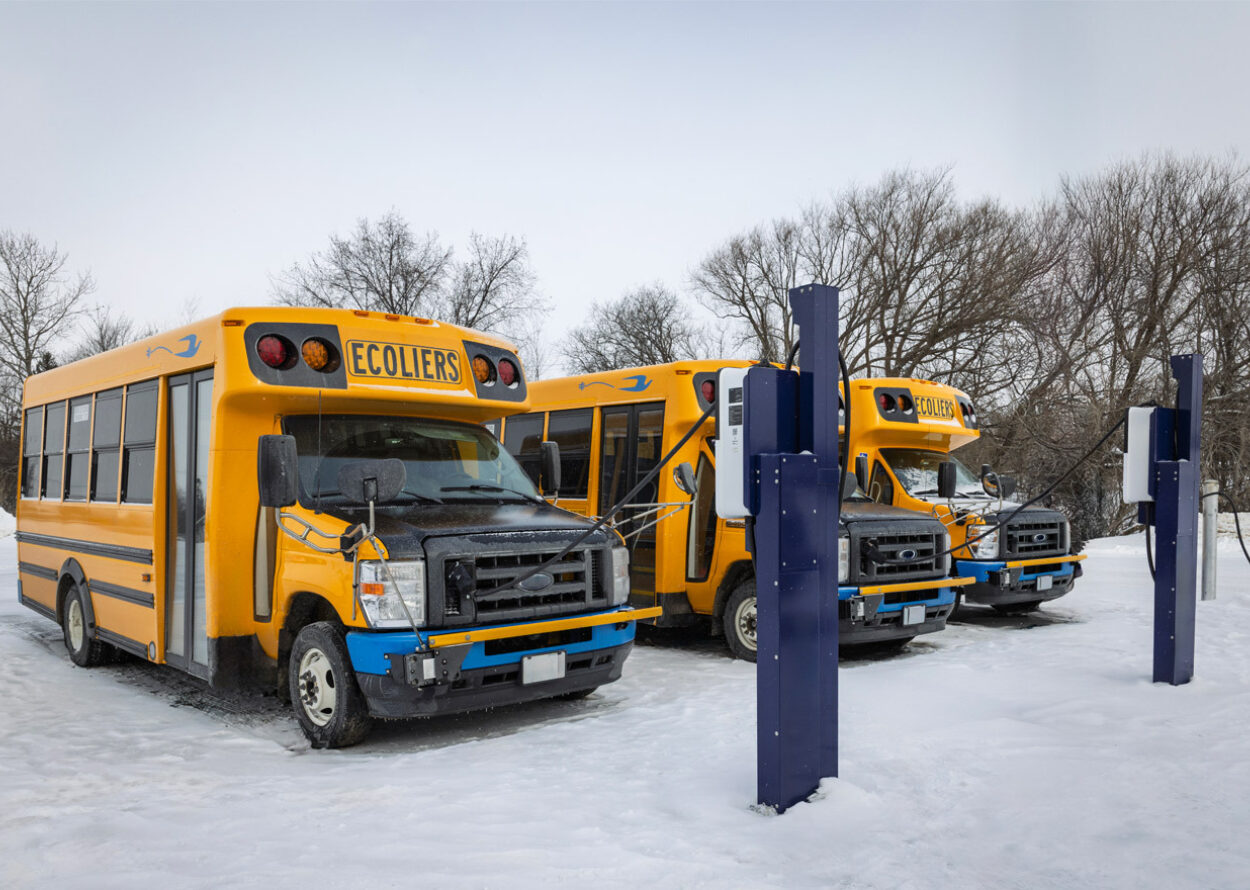
Extreme temperature swings driven by climate change, combined with ambitious decarbonization goals in transportation, are putting new pressure on energy providers. An already busy electrical grid must now handle even higher demand during cold months and heat waves.
That’s why, starting in winter 2024, we launched a demand response program designed specifically for electric fleets, in partnership with Hydro-Québec. Here’s a look at how the program works, the role of Cleo’s platform, and the concrete results achieved after its first winter in action.
Why should EV fleets manage power demand?
Transportation electrification is accelerating across Québec, driven by 2030 targets for urban, school, and government fleets. But this shift also means the grid faces more demand during peak periods.
This added pressure can:
- Drive up costs at every stage of the electricity value chain, from extraction and production to distribution.
- Reduce overall electricity availability.
- Force additional infrastructure investments by Hydro-Québec.
- Translate into higher costs for taxpayers and society at large.
To strengthen grid resilience, demand reduction and optimization strategies are essential.
The Demand Response program for EV fleets
In 2024, Polara and Hydro-Québec launched a pilot project to help electric fleets shift charging away from winter peak events.
The program provides:
- A financial incentive to cover part of the costs of implementing demand management.
- Greater flexibility for fleet operators compared to Hydro-Québec’s standard reference program.
The peak events
Hydro‑Québec’s demand‑management period runs from December 1 to March 31. Participants are notified of an upcoming peak event at least 24 hours in advance.
Hydro Quebec's program
Between 6–9 a.m. and 4–8 p.m
Monday to Friday
Excluding weekends and public holidays
Upt to 2 events per day
with a minimum 7‑hour interval between events
January and February
Concentrate the bulk of the season’s peak events
70%
of events
take place in the morning
How it works
Cleo automatically manages charging loads during these events, without disrupting fleet operations. The platform adjusts charging schedules and power levels to ensure every vehicle is ready on time.
Operators are notified in real time through Cleo or their preferred channel.
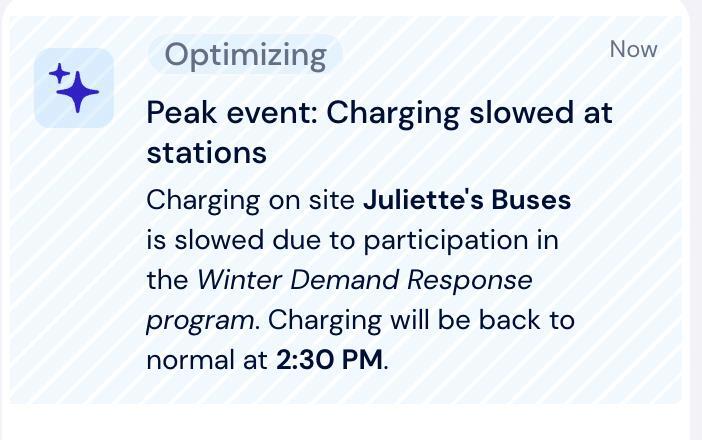
At the end of the winter season, fleets receive a credit on their electricity bill based on the amount of demand their operations were able to shift away from peak periods.
Results from the first year of our Demand Response program
By rescheduling charging activities, Cleo’s smart platform was able to shift up to 85% of kWh consumption outside of peak hours during winter 2024-2025.
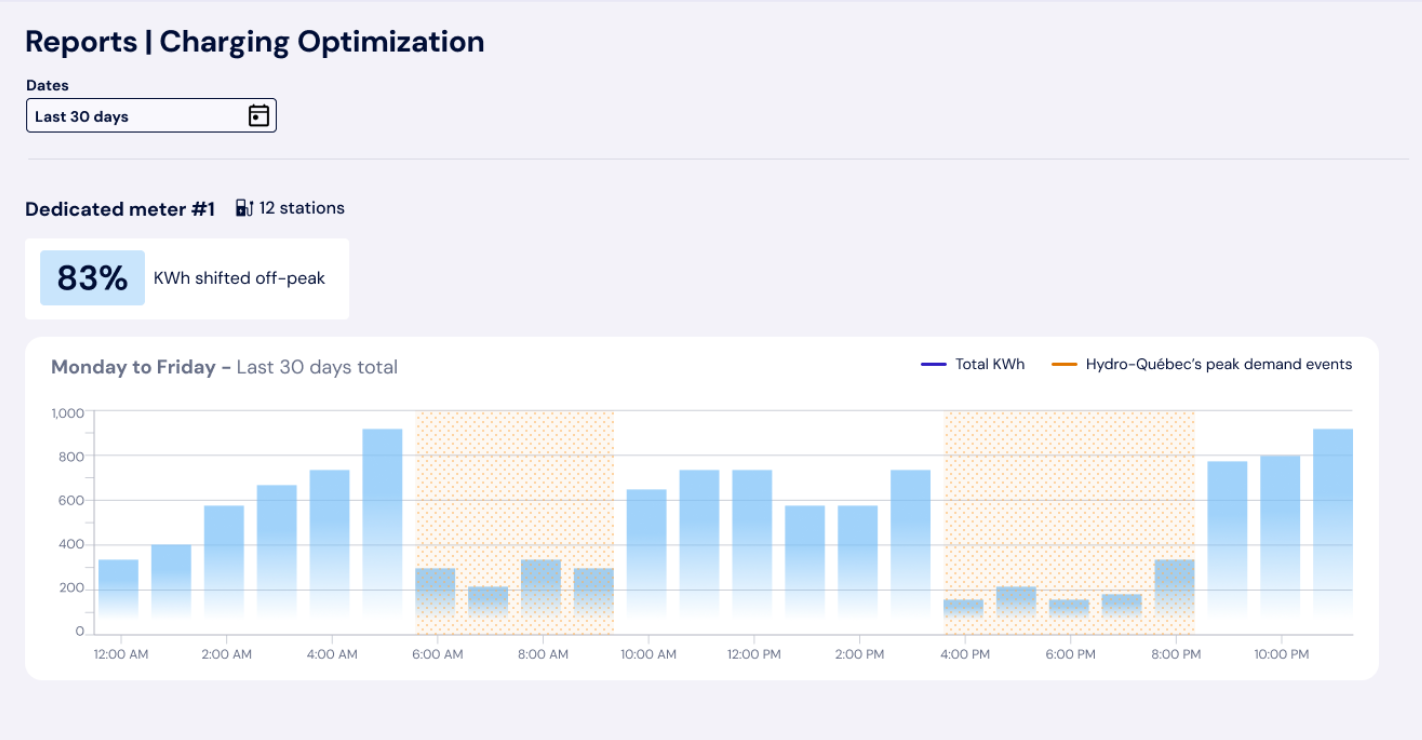
Around 15 Cleo-managed charging sites participated, with zero operational impact thanks to automated charging management.
A simple, effective way to cut costs while helping relieve stress on the grid.
Between $200 and $600
per peak event, per site
Average rebates earned on electricity bills by customers participating in the program in 2025.
What's next?
The Demand Response program, developed in partnership with Hydro-Québec, is back for a second year.
This type of program is also being developed with other energy providers to free up even more capacity during critical moments. Of course, smart energy management can only deliver its full value when operations are reliable, something that will come with more mature technology and growing fleet operator confidence.
Because the future is electric!